The shortest day of the year arrives without ceremony. By mid-December the light has thinned to a few grey hours, the heating clicks on before four in the afternoon, and the kitchen table disappears under cards, receipts and half-finished lists. It is tempting to treat the solstice as a deadline to sprint past. It works better as a hinge — the point where the year stops opening outwards and begins to fold back in on itself.
A journal is a good place to meet that turn. Not for a summary of the year, and certainly not for a highlight reel. Twenty minutes with a pen while the dark gathers outside is enough to notice what you have been carrying, what you are ready to put down, and what you might want to pick up when the light returns.
There is less pressure on 21 December than on 31 December. No fireworks, no countdown, no one asking what your word for the year is going to be. The solstice is an astronomical fact rather than a social event, and that makes it unusually good company for reflection. You are not performing anything. You are sitting in the dark with a notebook, which is where most truthful writing starts.
A few practical notes before you begin. Write by hand if you can — it slows you down and keeps the inner editor occupied with spelling rather than content. Turn the overhead light off and keep one lamp on. Set a timer for twenty minutes and stop when it rings, even mid-sentence; unfinished sentences are often the most interesting ones. Resist the urge to read back and tidy up afterwards. This is a working page, not a finished piece.
December journals often turn into audits: what I achieved, what I failed at, what I should have done differently in March. That approach rarely produces anything useful. Try questions that ask for detail rather than verdicts.
Do not answer all of them. Pick three, write a page on each, and let the rest sit unused. Prompts are a way in, not a syllabus.
Winter low mood is common and it is not a character flaw. Shorter days, less daylight, more time indoors and the accumulated tiredness of a long year all press in at once. Naming that on the page helps more than pretending it is not there. Instead of writing "I feel awful", try to get specific: the grey light at three o'clock, the flat feeling after a phone call, the way you keep checking the clock. Detail is what turns a mood into something you can look at.
Write the melancholy down plainly, without arguing with it and without dressing it up. The page can hold it so you do not have to carry all of it in your head.
If low mood lasts for weeks, affects your sleep, appetite or ability to work, or comes with a sense of hopelessness, that is worth talking to your GP about rather than journaling through alone. Writing is a useful companion to proper support, not a replacement for it.
The solstice is the one moment in the calendar when doing less is the seasonally correct choice. Borrow that permission for the page.
Answers here are often unglamorous: a bath, an early night, a book you have read three times before, soup. Take them seriously anyway. Rest is not a reward for finishing; it is part of how the next stretch gets done.
From 22 December the days lengthen, by seconds at first. That slow return is a gentler model for looking ahead than a list of resolutions you will have abandoned by February. Try prompts that point towards direction rather than targets.
What do you want more of in the first week of January? What do you want less of? If the coming year had one clear theme rather than five goals, what would it be? Who would you like to see more often, and what is the smallest step towards that? What would you like to be true this time next year, and what could you do in January that moves towards it?
Keep the answers small and specific. "Walk before work twice a week" beats "get fit". "Ring my sister on Sundays" beats "be a better sibling". Small promises survive contact with real life.
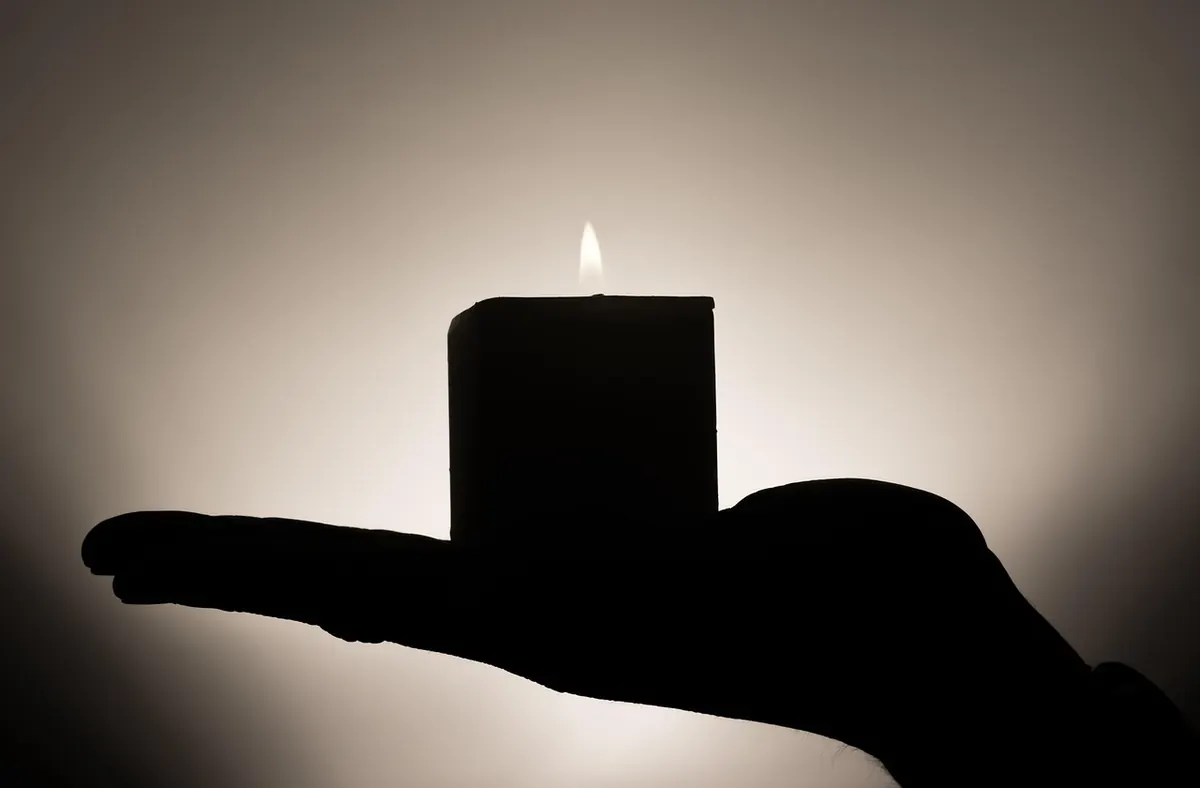
If you want something repeatable, try this. Find twenty minutes after dark. Make a drink, light one candle, and put your phone in another room. Write the date at the top of a fresh page. Then work through three questions: what am I carrying from this year, what am I putting down, and what am I keeping? Write for five minutes on each without stopping. Close the notebook.
Do the same at the summer solstice in June and you will have two markers a year — one for the dark, one for the light — and a record of how you moved between them. That is the whole point. The shortest day is not a problem to be solved. It is a pause worth writing into.
Photo: kundennote_com / Pixabay